고정 헤더 영역
상세 컨텐츠
본문 제목
Biotechnology and Computing: How Living Tech is Revolutionizing Future Systems
본문
728x90
Discover how biotechnology is merging with computing to create self-healing devices, DNA storage, and bio-processors. Explore the future of bio-computing today!
Introduction
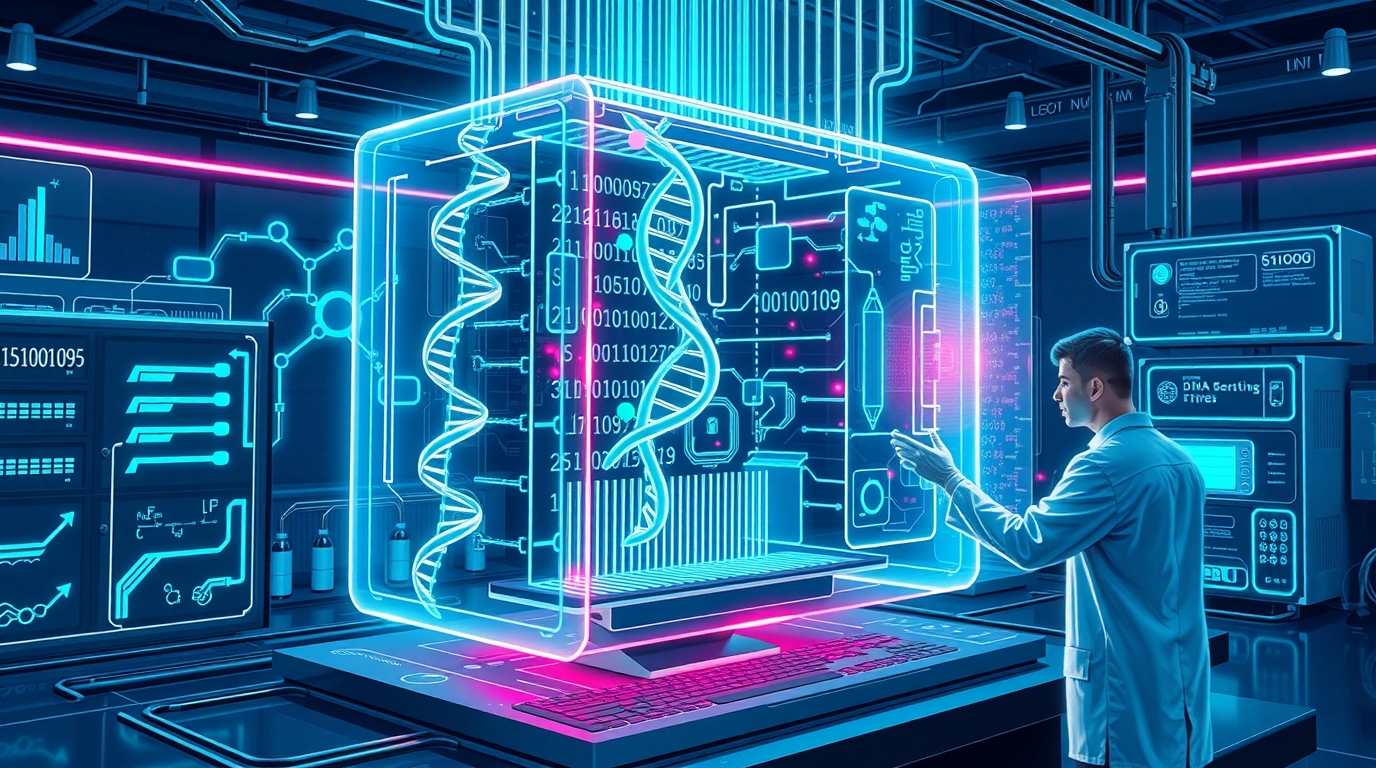
Imagine a computer that repairs itself like human skin or stores data in DNA strands instead of silicon chips. Sounds like sci-fi? Thanks to biotechnology, this future is closer than you think.
Biotechnology is no longer just about medicine—it’s reshaping computing in ways we never imagined. From bio-processors that mimic the human brain to DNA-based storage that could outlast hard drives by centuries, the fusion of biology and technology is unlocking mind-blowing possibilities.
In this article, we’ll explore:
✔ How biotechnology is changing computing
✔ Real-world applications (like neural implants and living sensors)
✔ The challenges and ethical concerns
✔ What the future holds for bio-computing
Ready to dive in? Let’s explore how living tech is rewriting the rules of computing!
1. What is Biocomputing? (And Why Should You Care?)
Biocomputing is the integration of biological systems with computer technology. Instead of relying solely on silicon, scientists are using DNA, proteins, and even living cells to process and store data.
Why does this matter?
- Efficiency: Biological processes use far less energy than traditional computers.
- Sustainability: Biodegradable components reduce e-waste.
- Innovation: Enables breakthroughs like brain-controlled prosthetics and disease-detecting nanobots.
Example: Researchers at MIT have created living transistors using proteins, paving the way for self-repairing electronics.
2. DNA Data Storage: The Ultimate Hard Drive?
What if you could store all of Netflix’s content in a drop of liquid? DNA data storage makes this possible.
How it works:
- Data is encoded into synthetic DNA strands.
- A single gram of DNA can hold 215 million GB (that’s more than all Google’s servers!).
- Unlike hard drives, DNA lasts thousands of years without degrading.
Companies leading the charge:
- Microsoft (Project Silica)
- Catalog (commercial DNA storage)
Challenge: High cost and slow read/write speeds—but experts predict it’ll be mainstream by 2035.
3. Bio-Processors: Computers That Think Like Brains
Silicon chips are fast, but they can’t match the human brain’s efficiency. Enter bio-processors—chips that use neurons or proteins to compute.
Breakthroughs:
- Intel’s Loihi 2: A neuromorphic chip that learns like a brain.
- Wetware Computing: Uses lab-grown neurons for problem-solving.
Potential uses:
- AI that learns in real-time (no more training datasets!)
- Medical implants that adapt to a patient’s body
4. Self-Healing Electronics: The End of Broken Devices?
Cracked phone screen? Future gadgets might fix themselves—thanks to biotechnology.
How it works:
- Self-repairing polymers (inspired by human skin)
- Bacterial circuits that regenerate conductive pathways
Real-world example:
- The University of California developed a flexible circuit that heals when torn.
5. Neural Implants: Merging Mind and Machine
Elon Musk’s Neuralink isn’t the only player—biotech is making brain-computer interfaces (BCIs) smarter and safer.
Latest advancements:
- Thought-controlled prosthetics (already helping paralyzed patients)
- Memory-enhancing chips (in testing for Alzheimer’s patients)
Ethical concerns:
- Could hackers hijack brain implants?
- Will this create a "superhuman" class?
6. The Challenges (And Risks) of Biocomputing
While promising, bio-computing faces hurdles:
- Security risks (DNA hacking is a real threat!)
- Ethical dilemmas (Should we use lab-grown neurons in machines?)
- High costs (DNA storage is still expensive)
7. The Future: What’s Next for Bio-Computing?
By 2040, experts predict:
✅ Personalized bio-computers (tailored to your DNA)
✅ Zero-waste electronics (fully biodegradable)
✅ AI-human hybrids (enhanced cognition via implants)
Conclusion: A New Era of Living Machines
Biotechnology is transforming computing from cold, rigid hardware into adaptive, living systems. While challenges remain, the potential is staggering—from eternal data storage to self-repairing gadgets.
The big question: Are we ready for a world where biology and tech are inseparable?
FAQ: Quick Answers to Your Bio-Computing Questions
1. Can DNA storage replace cloud servers?
Not yet—it’s too slow and expensive, but it could be the future of long-term archival storage.
2. Are bio-processors faster than silicon chips?
Not in raw speed, but they’re far more energy-efficient and better at learning.
3. Will biocomputing make smartphones obsolete?
Maybe! Future devices could be biological hybrids—think smart contact lenses or neural interfaces.
4. Is Neuralink safe?
Early trials show promise, but long-term effects are still unknown.
5. Can I buy a self-healing phone today?
Not yet, but companies like Samsung are researching it!


